
Behavioral Finance: Why Smart People Lose Money
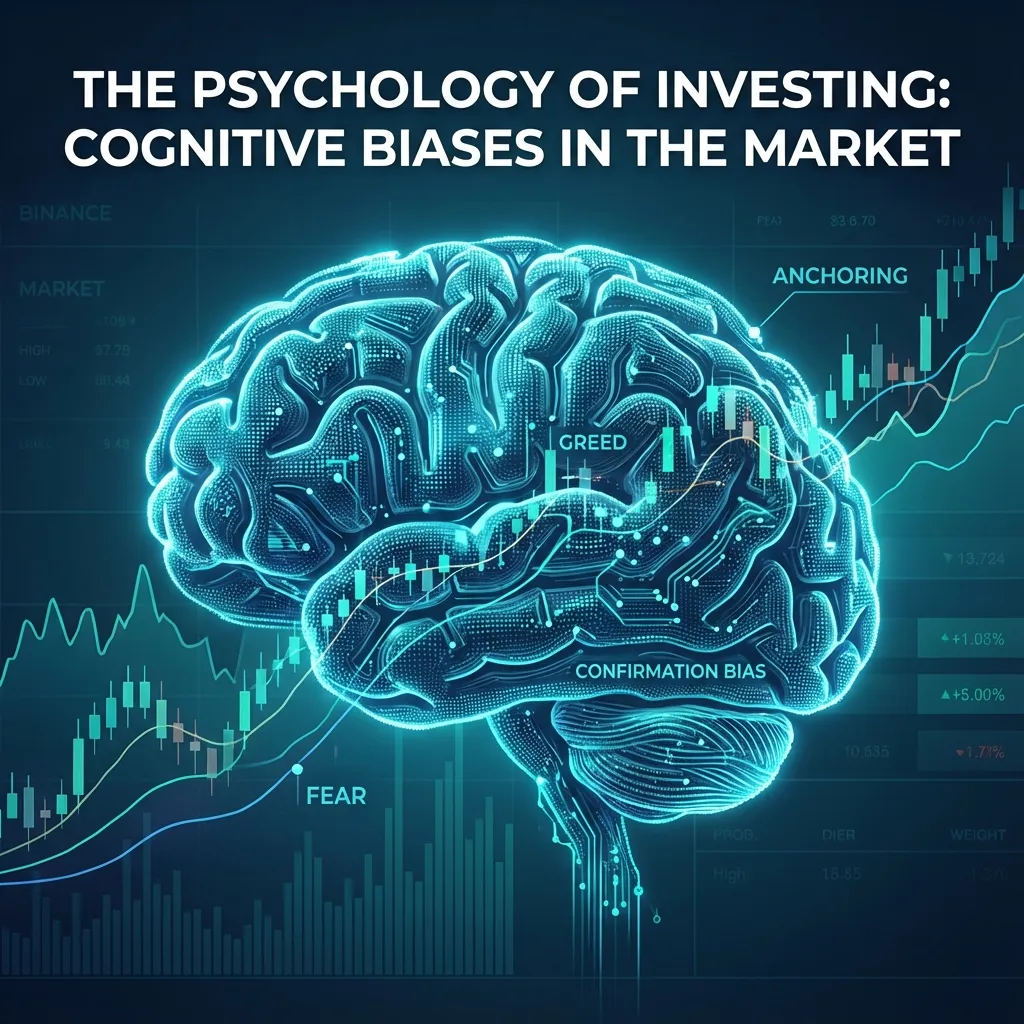
We like to think we are rational, sophisticated investors who digest data and output optimal decisions. In reality, our brains are wetware from the Stone Age, hardwired to panic at perceived threats and chase shiny objects. Behavioral finance explains why smart people constantly lose money, and how you can hack your own psychology to win.
Key Takeaways
7 points- 1The Core Problem: Investors are not purely rational. We are emotional beings driven by fear, greed, and ego.
- 2Loss Aversion: The psychological pain of losing $1,000 is twice as intense as the pleasure of gaining $1,000, causing investors to hold losers.
- 3Confirmation Bias: We only seek out news that confirms what we already own, creating dangerous blind spots.
- 4The Disposition Effect: The tendency to sell winners too early (to lock in relief) and hold losers too long (to avoid pain).
- 5Herd Mentality: If everyone else is buying, your brain screams 'Safe!' precisely when it is most dangerous.
- 6Sunk Cost Fallacy: Throwing good money after bad to avoiding admitting failure.
- 7The Solution: You can't change your brain, but you can build systems (automation, rules) to bypass it.
Part 1: What Is Behavioral Finance?
So what is behavioral finance for beginners trying to make sense of the markets? Classical economics assumes the "Efficient Market Hypothesis"—that all investors are rational actors who make decisions to maximize their utility. Behavioral finance, pioneered by Nobel laureates Daniel Kahneman, Amos Tversky, and Richard Thaler, proves this is nonsense.
It studies the psychological influences and cognitive biases that affect the financial behaviors of investors and financial practitioners. In short: The market is not a graph of math; it is a graph of human emotion.
The Two Systems (Kahneman's Framework)
In his seminal book "Thinking, Fast and Slow," Kahneman describes our brain having two modes:
- System 1 (Fast): Instinctive, emotional, automatic. "That lion is running at me, run!" or "Stock graph red, sell!" It is fast, efficient, but often wrong in complex situations. It relies on heuristics (mental shortcuts).
- System 2 (Slow): Logical, calculating, deliberate. "Let me analyze the P/E ratio and cash flow statement." It is accurate, but lazy and energy-intensive. The brain tries to avoid using it.
Bad investing happens when System 1 hijacks the controls from System 2 during periods of stress (Market Crashes) or excitement (Bubbles).
Part 2: The 9 Deadly Biases
These are the specific bugs in our code that Wall Street algorithms exploit to take your money. Learning how to overcome cognitive biases in investing starts with recognizing them—that is the first step to defeating them.
1. Loss Aversion (Prospect Theory)
Prospect Theory shows that humans weigh losses much more heavily than gains. Losing $100 feels twice as bad as finding $100 feels good. The pain of a loss is asymmetrical.
The Result: You cut your flowers and water your weeds. This is called the "Disposition Effect," and it explains why investors sell winners too early and hold losers too long—a pattern that quietly destroys portfolio performance.
2. Confirmation Bias
Once you buy a stock (e.g., Tesla), you unconsciously filter out all negative news about it. You only read bullish articles. You dismiss bearish analysts as "haters." You join forums where everyone agrees with you.
You are not researching; you are seeking validation. This leaves you blind to fundamental shifts in the company's story until it is too late. The most dangerous words are "I'm sure I'm right."
3. Recency Bias
We tend to extrapolate the recent past into the infinite future. In a bull market, we think stocks will go up forever. In a bear market, we think the world is ending.
- In 2021 (Bull Market): "Tech stocks only go up. 50% returns are normal." -> You buy the top.
- In 2022 (Bear Market): "The Fed is killing the economy. Stocks will go to zero." -> You sell the bottom.
4. The Endowment Effect
We value things more simply because we own them. In a famous study, participants given a mug demanded $7 to sell it, while buyers were only willing to pay $3. In investing, this irrational attachment prevents you from reallocating capital. You hold a stock not because it's the best place for your money now, but because you happen to own it already. It binds you to your past mistakes.
5. Anchoring
You buy a stock at $100. It drops to $80. You refuse to sell until it gets back to $100. Why? Because $100 is your "Anchor." The market does not care about your entry price. The stock is worth $80. Anchoring keeps you trapped in the past. Smart investors re-evaluate the asset based on its current price and prospects, ignoring their cost basis. If you want to understand how to avoid anchoring bias when averaging down on a falling stock, run the numbers objectively with a stock averaging calculator instead of fixating on your original entry price.
6. Herd Mentality
Evolution taught us that being alone in the jungle means death. So, when everyone is buying (FOMO), we feel safe buying. When everyone is panicking, we feel safe panicking. In investing, the herd is usually slaughtered because they arrive late to the party and leave late from the fire. Contrarian investing requires fighting millions of years of evolution.
7. Overconfidence Effect
Studies show 80% of drivers think they are "above average." Similarly, active traders believe they can time the market better than professionals. This leads to excessive trading, high fees, and lower returns. Men are statistically more prone to this than women (who tend to trade less and thus earn higher returns). Overconfidence is why day traders blow up their accounts.
8. Sunk Cost Fallacy
You've spent $500 repairing an old car. It breaks again. You spend another $500 because "I've already put so much into it." In investing, this is "Averaging Down" on a broken company just to justify your initial purchase. You throw good money after bad to delay the admission of failure.
9. The Ostrich Effect
Named after the (mythical) habit of ostriches burying their heads in the sand. When the market is crashing, you simply stop logging in. You avoid opening your statements. You pretend the problem doesn't exist. This denial prevents you from making rational moves (like tax-loss harvesting or rebalancing) that could actually help you during the downturn.
Part 3: The Neuroscience of Money
It isn't just "mindset." It is biology. Functional MRI scans show exactly what happens in your brain during trading.
The Dopamine Hit (Profit)
When you make money, your brain releases Dopamine (the pleasure chemical). It is the same pathway activated by cocaine. You feel euphoria. You feel invincible. This leads to Risk Seeking behavior. You double down, hoping for another hit. This is why a winning streak is often followed by a catastrophic loss.
The Cortisol Spike (Loss)
When you lose money, your amygdala (fear center) fires. Your body releases Cortisol (stress hormone). This triggers the "Fight or Flight" response. Your heart rate increases. You get tunnel vision. Your IQ actually drops. This leads to Panic Selling. You are biologically incapable of complex math in this state.
Part 4: The Marshmallow Test & Delayed Gratification
In the famous Stanford experiment, children were offered one marshmallow now, or two if they could wait 15 minutes. The researcher left the room. Some kids ate it immediately. Others distracted themselves to wait.
Follow-up studies decades later showed the "waiters" had better SAT scores, lower BMIs, and higher net worths. Investing is the ultimate Marshmallow Test. Can you refuse the "one marshmallow" (spending money today on a new car) to get "two marshmallows" (compound interest over 20 years)? Most people fail because they discount the future too heavily (Hyperbolic Discounting).
Part 5: Behavioral Portfolio Theory (BPT)
Traditional finance says investors treat their portfolio as a single pyramid of risk-adjusted assets. Behavioral Portfolio Theory says we actually separate our money into mental "layers" or "buckets," each with a different goal.
The Mental Buckets
- Safety Bucket: "I cannot lose this money." (Cash, Insurance, Bonds).
- Growth Bucket: "This is for retirement." (index Funds, Blue Chips).
- Lottery Bucket: "I want to get rich quick." (Crypto, Options, Penny Stocks).
The Problem: Investors often mistakenly put "Safety" money into the "Lottery" bucket during bubbles, jeopardizing their security. BPT emphasizes keeping these buckets strictly separated.
Part 6: Practical Tools to Hack Your Brain
You cannot surgically remove these biases. But you can install safeguards (Nudges) to prevent them from destroying your wealth.
1. The Ulysses Pact (Automation)
Ulysses tied himself to the mast so he couldn't steer the ship into the sirens so matter how much he wanted to.
Action: Set up automatic monthly contributions to index funds. Delete the trading app from your phone. Do not give yourself the option to intervene during market hours. A SIP calculator can show you how automated, emotion-free investing compounds over time.
2. The Trading Journal
Write down why you are buying a stock before you click buy.
Action: "I am buying X because earnings grew 20%." If the stock drops but earnings are still good, you read your journal and hold. If you don't write it down, your System 1 brain will reinvent the reason later to justify holding a loser.
3. The Overnight Rule
Never make a portfolio change while the market is open. If you want to sell, decide at 2 PM, but force yourself to wait until 10 AM the next day to execute. 90% of panic vanishes after a good night's sleep. Markets look very different in the morning light.
Case Study: The Covid Crash (2020)
Educational ExampleA Lesson in Recency Bias and Panic
The S&P 500 drops 35% in three weeks. The news says "The Economy is Closed Indefinitely." Unemployment spikes.
Recency bias says "It will keep dropping." Herd mentality sees everyone selling. Fear screams "Cash out now to save what's left!" Investor sells at the bottom.
"This is a temporary external shock, not a structural failure. Stocks are on a 35% discount. I will rebalance my portfolio, which forces me to sell bonds (high) and buy stocks (low)."
By August 2020, the market hit new All-Time Highs. The rational investor made a fortune. The emotional investor solidified a 35% loss and missed the recovery.
This is a hypothetical scenario using historical market data for educational purposes only. Past performance does not guarantee future results.
Part 7: Mental Accounting (The House Money Effect)
This is the tendency to treat money differently depending on where it came from.
- Found Money: You win $1,000 in a lottery. You spend it on a lavish dinner or high-risk crypto. "Easy come, easy go."
- Earned Money: You work 40 hours to earn $1,000. You put it in a savings account. You protect it fiercely.
The Truth: Money is fungible. $1 equals $1. Treating investment gains as "house money" leads to reckless gambling. "I'm up $5,000 on this stock, so I can risk it all on earnings." No! That $5,000 is yours now. Treat it with the same respect as your paycheck. Losing "profit" is the same as losing "principal."
How to Control Emotions When Investing in Stocks
The hardest part of learning how to control emotions when investing in stocks is accepting that willpower alone will fail you during a crash or a mania. Instead of trying to "stay calm," engineer your environment so that the calm decision is the default one. Pre-commit to a written set of rules—when to buy, when to rebalance, and when (if ever) to sell—while your System 2 brain is in charge. Then automate as much as possible so your panicked System 1 brain never gets to touch the controls. The goal is not to feel less fear; it is to make sure your fear can no longer reach the "sell" button.
The Bias-Busting Cheat Sheet
Recognizing a bias in the abstract is easy; catching it in the moment your finger is hovering over the "sell" button is hard. Use this quick-reference table as a pre-trade gut check. When you feel the urge to act, find the trigger that matches your emotion and apply the system fix instead of the instinct.
| Bias | What It Sounds Like In Your Head | The System Fix |
|---|---|---|
| Loss Aversion | "I'll sell once it gets back to break-even." | Set a stop-loss at purchase; judge the stock on its future, not your entry. |
| Confirmation Bias | "The bears are just jealous haters." | Actively write down the strongest bear case before you buy. |
| Recency Bias | "It's gone up all year, so it'll keep going up." | Zoom out to a 10-year chart; rebalance on a fixed calendar. |
| Anchoring | "It's cheap now, it was $100 last month." | Ignore the old price; re-underwrite the thesis at today's value. |
| Herd Mentality | "Everyone on X is buying this, I'm late!" | Impose a 24-hour cooling-off rule on any crowd-driven idea. |
| Overconfidence | "I can time this one perfectly." | Track every trade in a journal; let the scoreboard humble you. |
| Sunk Cost | "I'm in too deep to sell now." | Ask: "Would I buy this today with fresh cash?" If no, exit. |
Notice a theme: nearly every fix replaces an emotion with a pre-written rule. That is the entire game. For the loss-aversion trap specifically, it helps to know your true recovery math before you decide to hold or average down—a break-even calculator shows exactly how far a stock must climb to erase a given loss, which often kills the "I'll just wait for break-even" fantasy.
Which Bias Is Costing You the Most? A 5-Minute Self-Audit
You don't suffer from all nine biases equally. Most investors have one or two dominant blind spots that do the majority of the damage. Run through this honest self-audit—answer yes or no to each—and count your yeses to find your primary weakness.
The Self-Audit Checklist
- Do you have a losing position you've held over a year purely to avoid "locking in" the loss? (Loss Aversion)
- Can you name a single serious risk to your largest holding? If not—(Confirmation Bias)
- Have you bought a stock in the last year mainly because it had already been rising fast? (Recency / Herd)
- Do you check your purchase price before deciding whether to sell? (Anchoring)
- Do you trade more than a few times a month because you feel you "have an edge"? (Overconfidence)
- Do you stop opening your brokerage app when the market is red? (Ostrich Effect)
How to read your score: Even one honest "yes" points to a repeatable leak in your process. Don't try to fix all six at once—pick the single bias you scored on and install one concrete safeguard (a rule, an automation, a journal entry) this week. Compounding better behavior beats compounding better stock picks.
Financial literacy and experience genuinely blunt these biases over time, but they never erase them—even professional fund managers exhibit the disposition effect. That is why the durable solution is structural (automation and rules), not motivational. If overconfidence is your flag, pairing this with our guide on position sizing and risk management will do more for your returns than any new stock idea.
People Also Ask
What is the most common behavioral bias in investing?
Overconfidence is often cited as the most widespread bias—surveys repeatedly find a large majority of investors rate their own skill as above average, which is statistically impossible. It quietly drives excessive trading, higher fees, and worse timing. Loss aversion runs a close second because it affects nearly everyone regardless of experience.
What is the difference between behavioral finance and traditional finance?
Traditional finance assumes investors are rational actors who always maximize utility and that markets are perfectly efficient. Behavioral finance, developed by Kahneman, Tversky, and Thaler, shows that real investors are systematically irrational—driven by emotion and predictable cognitive shortcuts. In practice, it treats the market as a graph of human psychology rather than pure math.
How does loss aversion cause the disposition effect?
Because the pain of a loss feels roughly twice as intense as the pleasure of an equal gain, investors rush to sell winners to lock in the good feeling and cling to losers to avoid the pain of realizing a loss. The net result—selling flowers and watering weeds—is the disposition effect. Over time this pattern reliably drags down portfolio returns.
Can you completely eliminate cognitive biases in investing?
No. These biases are hardwired features of human cognition, and even seasoned professionals fall prey to them under stress. The realistic goal is not to feel less fear or greed but to build systems—automation, written rules, and cooling-off periods—so your emotional brain never reaches the buy or sell button at the wrong moment.
Does financial literacy reduce behavioral biases?
Higher financial literacy and hands-on experience do measurably reduce the impact of biases like herding and recency, mainly because knowledgeable investors are more likely to follow a process. However, literacy alone does not immunize you—overconfidence can actually grow with knowledge. Structural safeguards remain essential even for expert investors.
FAQ: Psychology
How do I stop checking my portfolio?
Should I use a robo-advisor?
Is "Paper Trading" good for practice?
Master Your Mind
The greatest enemy of your financial freedom is staring back at you in the mirror. You cannot control the market, inflation, or the Fed. You can only control the actions you take in response. Be the master of your own psychology.
Automate your savings (remove the choice).
Write a written Investment Policy Statement.
Stop watching financial news daily.
Investment Risk Disclaimer
This content is for educational purposes only and should not be considered financial advice. All investments carry risk, including the potential loss of principal. Past performance does not guarantee future results. Before making any investment decisions, please consult with a qualified financial advisor who understands your personal financial situation, risk tolerance, and investment goals.
Stock Averager provides tools and educational content but does not provide personalized investment advice or recommendations.
Explore this topic in depth
Investor Psychology
Why disciplined rules get abandoned exactly when they matter most, and how to design around it.
- FOMO Trading: How to Stop Chasing and Start ProfitingWhy chasing feels rational in the moment and rarely is.
- When NOT to Average Down: 7 Red Flags to WatchSeven red flags, with a real bankruptcy as the worked example.
- Stop-Loss Orders: Your Insurance Against Catastrophic LossesDefining the exit in advance, and the order types that fail in fast markets.
- DCA Out: How to Sell Without Timing the MarketSelling systematically, so the exit isn't a single timing bet.
- Lump Sum vs DCA: When to Invest All at OnceWhat the evidence says about deploying a windfall gradually or at once.
About Stock Averager Team
Expert financial analysts dedicated to simplifying complex investment strategies for everyone. We build tools that help you make better money decisions.
Recommended Tools
Related Articles
FOMO Trading: How to Stop Chasing and Start Profiting
Portfolio Rebalancing: The Art of Selling Winners
When NOT to Average Down: 7 Red Flags to Watch
Hedging with Options: Protect Your Portfolio from Crashes
Position Sizing: How Much to Invest in Each Stock
Diversification: The Only Free Lunch in Investing