
Portfolio Rebalancing: The Art of Selling Winners
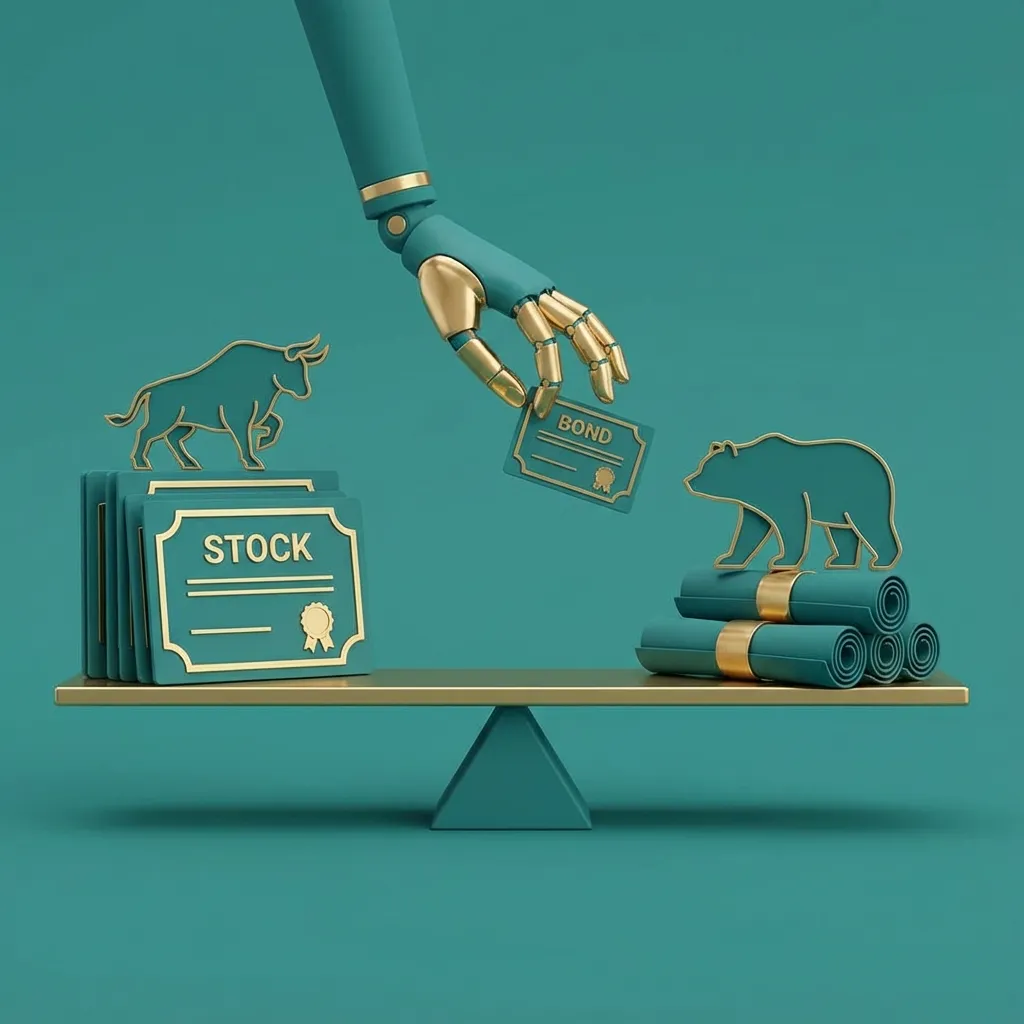
Imagine you planted a meticulously designed garden with 50% Roses (Stocks) and 50% Cactus (Bonds). Over the summer, the Roses grew wild, aggressive, and beautiful, taking over 90% of the garden plot. A harsh winter is coming. If you do nothing, your entire garden dies because the Roses cannot survive the frost. You must prune the Roses back to let the hardy Cactus survive. This is Portfolio Rebalancing. It is the emotionally difficult, counter-intuitive, but mathematically essential act of selling your winners (which feels wrong) to buy your losers (which feels crazy) to maintain your target risk profile. It is the only way to enforce strict "Buy Low, Sell High" discipline.
Key Takeaways
5 points- 1The Drift Danger: Over time, high-return assets (stocks) naturally drift to dominate your portfolio, unknowingly increasing your risk profile right before a market crash.
- 2The Free Lunch: Rebalancing systematically forces you to sell assets when they are expensive (high valuation) and buy them when they are cheap (low valuation).
- 3Calendar vs. Threshold: You can rebalance on a set date (e.g., Jan 1st) or when bands are breached (e.g., 5% off target). Threshold is slightly better but requires more monitoring.
- 4The 'Rebalance Premium': Studies show disciplined rebalancing can add 0.5% to 1.0% to annual returns while significantly reducing volatility over a 10-year period.
- 5Tax Drag: In taxable accounts, rebalancing triggers capital gains. Use 'Cash Flow Rebalancing' (buying the underweight asset with new money) to avoid paying the IRS unnecessarily.
Who This Is For
Advanced LevelPerfect if you:
- Your 60/40 Conservative portfolio has drifted into an 80/20 Aggressive portfolio without you noticing
- One single stock (e.g., NVIDIA) has grown to be 20% of your net worth and you are terrified to sell it
- You are paralyzed by the decision of when to take profits and fear selling too early
- You want a robotic, emotion-free system to manage risk in both bull and bear markets
You'll learn:
- The mathematics of 'Portfolio Drift' and how it creates hidden risks that blow up accounts
- Step-by-step methods for Calendar Rebalancing vs. Tolerance Bands (Thresholds)
- How to rebalance without paying taxes (The 'Cash Inflow' Method)
- Why 'Letting Winners Run' is a valid strategy for individual stocks but a dangerous one for asset classes
- A comprehensive 5-step checklist for your Annual Portfolio Review
- Advanced strategies like CPPI (Constant Proportion Portfolio Insurance)
Part 1: What is Portfolio Drift?
If you are wondering what portfolio drift is for beginners, the simplest definition is this: it is the slow, silent change in your asset mix caused by some holdings growing faster than others. You start with a plan. You set a target allocation: 60% US Stocks, 40% Bonds. This is your "Sleep Well at Night" number.
Then, a bull market happens. Stocks go up 20% a year consistently. Bonds stay flat or drop slightly.
Three years later, you look at your account. You are now 85% Stocks and 15% Bonds. You feel great because your balance is higher than ever. But you are no longer a "Balanced 60/40 Investor." You are an "Aggressive 85/15 Investor." You have accidentally taken on massive risk without accepting it.
When the inevitable crash comes (and stocks drop 50%), your portfolio takes a massive hit because you had too little "cushion" (Bonds). Rebalancing is the act of resetting the clock. It brings you back to your safety baseline.
The Cost of Doing Nothing (2008 Crisis)
In 2008, a standard 60/40 portfolio lost about -20%. It recovered within 2 years.
A drifted 80/20 portfolio (which had enjoyed the 2003-2007 bull run) lost about -35%.
That extra 15% loss causes panic selling. Investors with 35% losses sold at the bottom and missed the recovery. Rebalancing protects you from your own greed/fear cycle.
Part 2: The Two Schools of Rebalancing
Once you understand how to rebalance your investment portfolio in principle, the next question is timing. How do you decide when to trim the hedges? The calendar vs threshold rebalancing debate is the central argument between financial planners, and each approach suits a different type of investor.
You check your portfolio on the same date every year (or quarter) and reset it to targets, regardless of what the market is doing.
- Pros: Simple. Easy to remember. Takes 10 minutes a year. Creates a routine.
- Cons: The market might move wildly between dates (e.g., crash in March, recover by December), and you miss the opportunity to buy the dip.
- Verdict: Best for most passive investors who want 'set and forget'.
You rebalance only when an asset deviates by a specific percentage (e.g., +/- 5% Absolute Deviation) from its target.
- Pros: Captures volatility better. You buy dips when they happen, not just when the calendar says so. Slightly higher returns.
- Cons: Requires constant monitoring. High maintenance. Can lead to over-trading in choppy markets.
- Verdict: Best for professional traders, robotic advisors, or spreadsheet nerds.
Part 3: The "Buy Low, Sell High" Mechanism
Rebalancing is counter-intuitive. It forces you to sell what you love and buy what you hate.
When stocks are crashing and the world is ending, Bonds often enter a bubble (flight to safety). Your Bonds are now overweight. Your Stocks are underweight.
Rebalancing forces you to SELL your safe Bonds (which are doing great) and BUY crashing Stocks (which look terrible and scary).
This feels insane in the moment. Your brain screams "Don't do it!" But mathematically, you are selling assets at a peak and buying assets at a generational trough. When the market recovers, you have more shares of stocks than you started with, powering your recovery. It is a systematic contrarian value play that removes emotion from the equation.
Case Study: The Dot Com Bust (2000-2002)
Educational ExampleThe Power of Rebalancing
Started 50/50. Tech Stocks doubled in 1999 (Nasdaq bubble). Portfolio became 80% Stocks. Then the crash hit (-80%). Their portfolio was decimated because they were massively overexposed at the top.
At the end of 1999, they saw Stocks were 80%. They SOLD 30% of their stocks (locking in massive gains) and purchased boring, uncool Bonds. When the crash happened in 2000, they had a huge pile of bonds to cushion the fall, and ample cash to buy cheap tech stocks at the bottom in 2002. They recovered years earlier.
This is a hypothetical scenario using historical market data for educational purposes only. Past performance does not guarantee future results.
Part 4: Tax-Efficient Rebalancing (The "Cash Flow" Trick)
The biggest downside to rebalancing is Taxes. Selling a winner in a taxable brokerage account triggers Capital Gains tax. You lose money to the government just to stay safe.
Smart investors use Cash Flow Rebalancing to rebalance without paying capital gains tax entirely. Before you sell anything, it helps to estimate the tax bill with a capital gains calculator so you know exactly what a sale would cost you.
The Strategy
- Check your targets: Stocks are Overweight (65%). Bonds are Underweight (35%).
- Do NOT Sell Stocks: Do not touch the heavy asset. Avoid the tax event.
- Redirect New Money: Take your next month's paycheck contribution ($1,000) and buy ONLY Bonds.
- Result: This buys up the underweight asset without selling the overweight one. No sale = No Tax Event.
*Note: This works best for accumulators who are adding money regularly. Retirees in withdrawal phase must sell to rebalance, but should do so in tax-advantaged accounts (IRA/401k) first.
Part 5: Rebalancing vs. "Letting Winners Run"
There is a famous trading saying: "Let your winners run and cut your losers." Rebalancing does the opposite—it cuts winners and adds to losers. Is this wrong?
The distinction is ASSET CLASS vs. INDIVIDUAL STOCK.
Do NOT rebalance heavily here. If Amazon is winning, it's because the business is growing. Selling it to buy a failing company (like Sears) is bad. Winners tend to keep winning (Momentum). Let Amazon become 10% of your stock bucket.
DO rebalance here. Asset classes are cyclical (Mean Reverting). If US Stocks are up 100% and Intl is flat, historically, Intl will likely outperform next. Trimming the asset class winner is purely risk management.
Part 6: Rebalancing in Retirement (Withdrawal Strategy)
When you are retired, rebalancing changes from "Risk Control" to "Income Generation." This is crucial.
Instead of reinvesting dividends, you are withdrawing 4% a year to live on. Rebalancing tells you which bucket to sell from. If you want to model how those yearly withdrawals interact with your allocation over time, a systematic withdrawal plan calculator can show how long the portfolio lasts under different drawdown rates.
- In a Bull Market: Stocks are up. Bonds are flat. You sell STOCKS to generate your cash for the year. This naturally trims your winners while they are high.
- In a Bear Market: Stocks are down 20%. Bonds are steady. You sell BONDS to generate your cash. This prevents you from selling stocks at a loss (Sequence of Returns Risk). You let the stocks sit and recover.
This simple rule ensures you never panic sell. You just follow the math. If stocks are down, you don't touch them. You eat the bonds until stocks recover.
Part 7: The "Rebalancing Premium" (Does it add Alpha?)
Academics have debated this for decades. Does rebalancing actually make you more money, or does it just lower risk?
The answer is: It depends on volatility.
In a smooth, straight-line bull market, rebalancing hurts returns (you keep selling the winner). But in a volatile, choppy market (like the 2000s or 2020s), rebalancing generates a "Volatility Drag" reversal. By constantly buying dips and selling rips, you can generate an extra 0.5% annual return over a static buy-and-hold portfolio. This is called the Rebalancing Bonus. It is the only "free lunch" in finance alongside diversification.
Part 8: Advanced - CPPI Strategy
For the sophisticated investor, there is Constant Proportion Portfolio Insurance (CPPI).
This is a dynamic rebalancing strategy used by banks to guarantee principal.
Formula: Exposure = Multiplier × (Asset Value − Floor).
Essentially, as your portfolio grows, you aggressively increase stock exposure. As it falls near your "Floor" (safety net), you aggressively move to cash. It creates a convex return profile (unlimited upside, limited downside), but risks getting "stopped out" in a whipsaw market.
Part 9: A Step-by-Step Rebalancing Checklist
Pick a boring day (e.g., your birthday or Tax Day). Avoid rebalancing during high volatility news unless you have nerves of steel.
Is your stock allocation >5% off target? (e.g., Target 60%, Current 66%). If yes, act. If it's 62%, do nothing (transaction costs aren't worth it).
"I need to sell $5,000 of VTI and buy $5,000 of BND." Write it down.
Place the trades. Ignore the news. Close the laptop. See you next year.
Part 10: The 5/25 Rule (Bernstein's Tolerance Bands)
If a flat 5% band feels too crude for a portfolio with both large and small holdings, the most widely cited refinement is the 5/25 Rule, popularized by author William Bernstein. It solves an obvious problem: a 5% absolute band is meaningless for a slice that is only 5% of your portfolio in the first place, because that holding would have to double before it ever trips the wire.
The rule says: rebalance a holding when it drifts by the greater of 5 absolute percentage points or 25% of its own target weight (relative). Big positions are governed by the 5% band; small positions are governed by the tighter 25% relative band.
| Target Weight | 5% Absolute Band | 25% Relative Band | Which Triggers First |
|---|---|---|---|
| 60% (Core Stocks) | 55% – 65% | 45% – 75% | Absolute (the 5% band is tighter) |
| 10% (Intl Stocks) | 5% – 15% | 7.5% – 12.5% | Relative (the 25% band is tighter) |
| 5% (REITs) | 0% – 10% | 3.75% – 6.25% | Relative (absolute is far too loose) |
Why the split matters
For your 60% core, you ignore noise until it reaches 65% or 55%. But for a 5% REIT sleeve, you act the moment it hits roughly 6.25% or 3.75%. This keeps your small, high-conviction bets from either quietly vanishing or ballooning into an accidental concentrated position. It is the same logic that governs position sizing at the individual-holding level.
Part 11: Which Account & Asset Do You Sell First?
Rebalancing is not just what to trade but where to trade it. Selling the wrong holding in the wrong account can turn a routine tune-up into an avoidable tax bill. Work down this priority ladder before you ever place a taxable sell order.
- Redirect new cash & dividends first. Point fresh contributions and un-reinvested distributions at the underweight asset. This is the zero-tax lever from Part 4 and it should always be your first move.
- Trade inside tax-advantaged accounts. Buys and sells inside an IRA, 401(k), Roth, or an Indian equivalent generate no immediate capital-gains event. Do as much of the correction here as the account balances allow.
- Harvest losses in taxable accounts. If a holding is underwater, selling it to rebalance also books a deductible loss. See tax-loss harvesting for the wash-sale rules.
- Sell high-cost-basis lots last. When you must sell a winner in a taxable account, choose the specific lots with the smallest embedded gain to minimize the tax hit. A capital gains calculator makes this trade-off concrete.
A related principle is asset location: keep tax-inefficient assets (bonds, REITs) inside sheltered accounts and tax-efficient equity index funds in taxable accounts. When your bonds live in the IRA, you can rebalance the entire fixed-income sleeve without touching a taxable dollar. Pairing smart location with the diversification baseline is what makes a rebalancing plan actually cheap to run.
How Often Should You Rebalance Your Portfolio?
One of the most common questions for beginners is how often to rebalance a portfolio, and the honest answer is: less often than you think. For most buy-and-hold investors, checking once a year is enough to control risk without racking up trading costs or tax events. If you prefer threshold rebalancing, the practical rule is to act only when an asset drifts more than 5% from its target rather than fussing over every 1% wiggle. Over-rebalancing in a choppy market quietly bleeds returns through fees and capital gains, so when comparing rebalancing frequency strategies, remember that discipline beats activity. To verify whether your real long-term growth rate is actually keeping pace with your plan, run your numbers through a CAGR calculator.
FAQ: Rebalancing
Does rebalancing hurt total returns?
What about Target Date Funds?
Should I rebalance my Crypto?
How do Robo-Advisors do it?
Rebalancing in practice
What is the 5/25 rule for rebalancing?
The 5/25 rule tells you to rebalance a holding when it drifts by the greater of 5 absolute percentage points or 25% of its own target weight. Large positions are governed by the 5% band, while small positions (like a 5% REIT sleeve) are governed by the tighter 25% relative band. It prevents small holdings from ballooning or disappearing before a flat 5% band would ever react.
Does rebalancing actually make you more money?
Not usually in a smooth, one-directional bull market, where trimming winners slightly lowers returns. Its main job is controlling risk and drawdown. In volatile, choppy markets it can add a modest 'rebalancing bonus' by systematically buying dips and selling rips, but you should treat rebalancing as a risk-management tool first and a return-enhancer second.
How much does rebalancing cost in taxes and fees?
In tax-advantaged accounts like an IRA or 401(k), rebalancing is essentially free of tax cost. In a taxable brokerage account, selling a winner triggers capital gains tax, which is the real expense. You minimize it by rebalancing with new cash, trading inside sheltered accounts, harvesting losses, and selling only high-cost-basis lots when a taxable sale is unavoidable.
Which asset should I sell first when rebalancing?
Follow a priority ladder: first redirect new contributions and dividends to the underweight asset, then trade inside tax-advantaged accounts, then harvest losses in taxable accounts, and only then sell winners in a taxable account choosing the lowest-gain lots. This sequence corrects your allocation while deferring or eliminating most of the tax hit.
Should I rebalance during a market crash?
Yes, that is exactly when disciplined rebalancing pays off, because it forces you to buy cheap stocks with your appreciated bonds. The catch is emotional: it feels terrifying to buy while prices are falling. Sticking to a pre-written threshold or calendar rule removes the in-the-moment panic and ensures you buy near the trough rather than freezing.
How often should a retiree rebalance?
Retirees can often rebalance through withdrawals rather than separate trades. Sell from whichever bucket is overweight to fund your annual spending: trim stocks in up years and draw from bonds in down years to avoid selling equities at a loss. Checking once a year, aligned with your withdrawal schedule, is usually enough.
The Discipline of Winning
Investing is 10% picking the right funds and 90% behaviour. Rebalancing is the behavior that separates the pros from the gamblers. It forces you to be rational when everyone else is emotional. It is the seatbelt that saves your life in a crash.
Check your asset allocation today.
Are you >5% off target? If yes, make a plan.
Execute the trade. Don't look back.
Investment Risk Disclaimer
This content is for educational purposes only and should not be considered financial advice. All investments carry risk, including the potential loss of principal. Past performance does not guarantee future results. Before making any investment decisions, please consult with a qualified financial advisor who understands your personal financial situation, risk tolerance, and investment goals.
Stock Averager provides tools and educational content but does not provide personalized investment advice or recommendations.
Explore this topic in depth
Risk Management & Position Sizing
Deciding in advance how much you can lose — the part of investing that determines whether you survive.
- Risk Management 101: The 1% Rule That Saves Portfolios (main guide)Capital preservation and the asymmetric maths of recovering a loss.
- Position Sizing: How Much to Invest in Each StockDeciding how much before deciding whether — the highest-leverage habit.
- Stop-Loss Orders: Your Insurance Against Catastrophic LossesDefining the exit in advance, and the order types that fail in fast markets.
- Diversification: The Only Free Lunch in InvestingWhat genuinely diversifies, and what only appears to.
- International Diversification: How Much Should You Hold?How much to hold abroad, and why the answer isn't market weight.
- When NOT to Average Down: 7 Red Flags to WatchSeven red flags, with a real bankruptcy as the worked example.
- Hedging with Options: Protect Your Portfolio from CrashesProtective puts, collars and portfolio-level crash protection.
- Market Orders vs Limit Orders: Which Should You Use?Control over price versus certainty of fill.
- FOMO Trading: How to Stop Chasing and Start ProfitingWhy chasing feels rational in the moment and rarely is.
Related topics
- Investor PsychologyWhy disciplined rules get abandoned exactly when they matter most, and how to design around it.
- Cost Averaging & Averaging DownLowering your average cost deliberately — when it compounds returns, and when it compounds a mistake.
- Options StrategiesConstructing positions: income, defined risk, direction-neutral structures, and portfolio protection.
About Stock Averager Team
Expert financial analysts dedicated to simplifying complex investment strategies for everyone. We build tools that help you make better money decisions.
Recommended Tools
Related Articles
When NOT to Average Down: 7 Red Flags to Watch
Behavioral Finance: Why Smart People Lose Money
FOMO Trading: How to Stop Chasing and Start Profiting
Hedging with Options: Protect Your Portfolio from Crashes
Position Sizing: How Much to Invest in Each Stock
Diversification: The Only Free Lunch in Investing