
Support and Resistance: How to Identify and Trade Key Price Levels
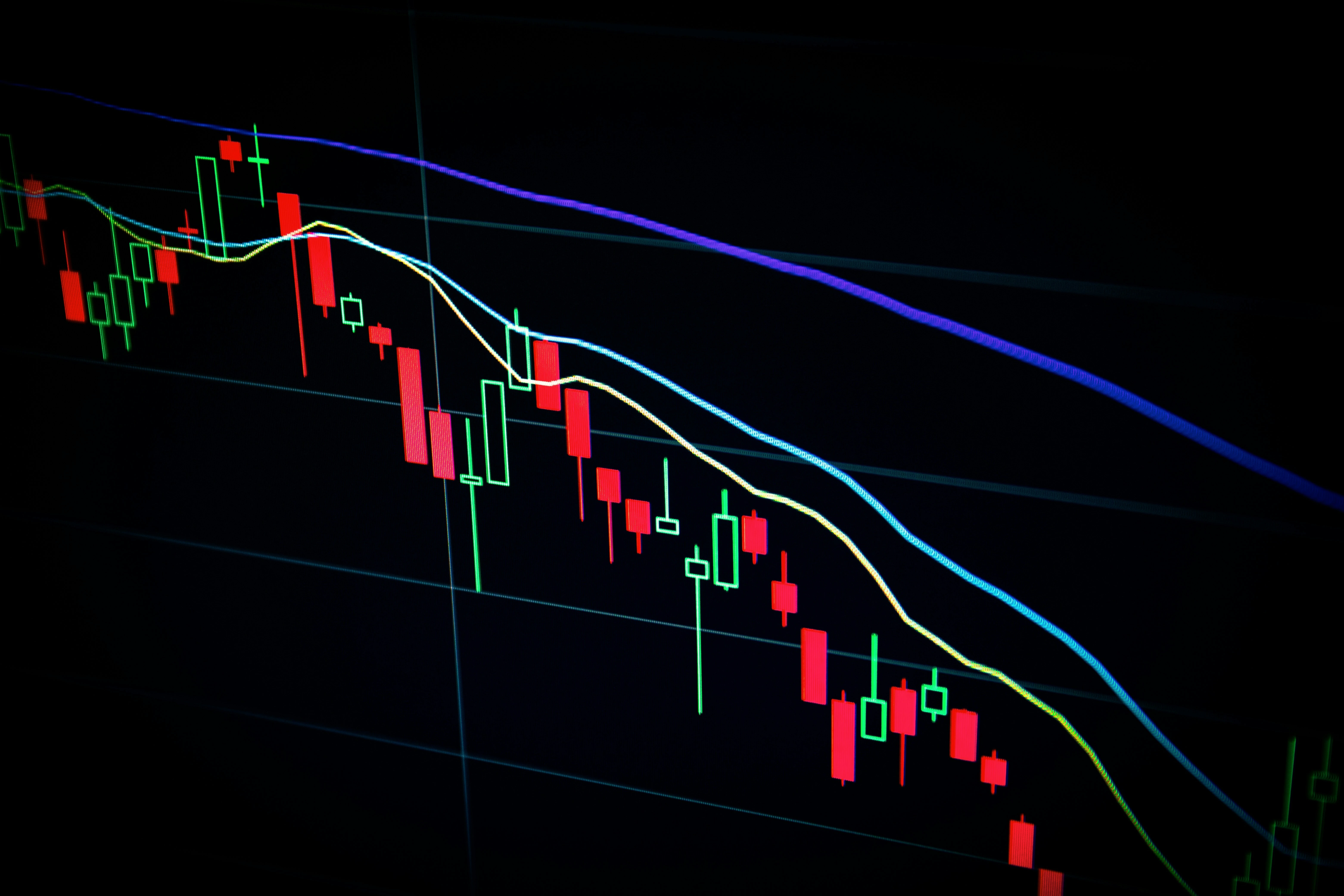
Strip away every indicator on your chart and you are left with one thing that always matters: price levels where humans (and algorithms) repeatedly buy and sell. Support and resistance are not lines on a chart — they are memories of past battles. Find them, and you have an edge in every trade you take.
Key Takeaways
7 points- 1Support is a price level where buying overwhelms selling. Resistance is where selling overwhelms buying.
- 2Levels work because of human memory: traders who got trapped at a price remember it and react when it returns.
- 3Round numbers (100, 500, 1000) and prior all-time highs are the strongest psychological levels.
- 4A broken support level becomes resistance, and vice versa — the role-reversal principle.
- 5Confluence is everything: a level confirmed by moving averages, prior swing points, and volume is 3-4x more reliable.
- 6Trade the bounce or the break — never trade inside the noise between levels.
- 7Always place your stop on the other side of the level. If price decisively closes through it, you were wrong.
Who This Is For
Beginner LevelPerfect if you:
- You enter trades without a clear invalidation level
- You set stop-losses by 'feel' or by a fixed percent rather than by structure
- You want to time entries around real levels, not random retracements
- You trade swing or positional setups and need clear targets
You'll learn:
- How to draw horizontal support and resistance lines that actually work
- Why round numbers and prior all-time highs are magnetic price levels
- How to draw trendlines for diagonal support and resistance
- The role-reversal rule: broken support becomes resistance
- How to combine S/R with volume to filter false breakouts
- Where to place stop-losses and profit targets relative to key levels
Part 1: What Support and Resistance Actually Are
If you have ever wondered what support and resistance are in stock trading, start here: markets do not move in straight lines. They climb, stall, retrace, find buyers at a certain price, and rally again — or fail to and roll over. The prices at which buyers consistently step in are called support. The prices at which sellers consistently step in are called resistance.
These are not magic numbers. They exist because of three things:
- Memory: Traders who bought at $50 and watched it drop to $40 will sell when it returns to $50 just to break even. That selling becomes resistance.
- Anchoring: Round numbers, prior highs, and prior lows become reference points everyone watches.
- Algorithmic reinforcement: Once a level is widely watched, algorithms place orders there, which makes it self-reinforcing.
The "Floor and Ceiling" Analogy
Picture a price chart as a room. Support is the floor — price keeps bouncing off it. Resistance is the ceiling — price keeps getting rejected from it. Until something breaks the structure (news, earnings, a macro event), price will keep bouncing inside the room. Your job is to identify the floor and ceiling, then trade the bounces or the breakouts.
Part 2: How to Draw Horizontal Levels
Learning how to draw support and resistance levels for beginners comes down to one rule: a horizontal support or resistance line connects two or more price points where the market reversed. The more touches, the stronger the level.
The 4-Step Method
- Zoom out. Start on a daily or weekly chart. Big-picture levels matter more than 5-minute squiggles.
- Find the obvious reversals. Mark prices where the chart made a clear V-shape (low) or inverted-V (high).
- Connect 2+ points. A line touched twice is a level. Touched 3+ times, it is a major level.
- Use zones, not lines. Levels are rarely exact — draw a thin rectangle ±0.5-1% around the price to capture the zone.
The Power of Round Numbers
Whole numbers like $50, $100, $500, and $1000 act like magnets. They are not technically meaningful — but humans fixate on them. Sell orders cluster at "nice" prices. A stock approaching $500 for the first time will often stall, retrace, and re-test before breaking through. Always mark major round numbers, even if they have not been tested yet.
Prior All-Time Highs and Lows
The single most important level on any chart is the prior all-time high. Above it, every long is in profit. There is no overhead supply. Conversely, when price breaks below a prior all-time low, every long is underwater — the path of least resistance is down. These are the highest-conviction levels in your entire toolkit.
Part 3: Trendline Support and Resistance
Not all levels are horizontal. Knowing how to draw a trendline on a stock chart opens up diagonal levels: in a strong uptrend, support keeps rising — connect the swing lows with a diagonal line and you have an ascending trendline. In a downtrend, connect the swing highs for a descending trendline.
Ascending Trendline
Connect 2+ higher lows. Price respects the line as dynamic support until it breaks. A clean break below the trendline with volume often marks the trend's end.
Descending Trendline
Connect 2+ lower highs. Price respects the line as dynamic resistance. A clean break above with volume often marks the start of a reversal or new uptrend.
Part 4: The Role-Reversal Principle
Here is the single most important S/R concept in technical analysis, and the reason traders ask why does broken support become resistance: once a level breaks, its role flips. A broken support becomes resistance. A broken resistance becomes support.
Why Role-Reversal Works
Imagine $100 has been support for months. Then it breaks. Now everyone who bought at $100 is underwater. If price rallies back to $100, those traders will sell to "get out at breakeven." That selling pressure turns the former support into new resistance.
The mirror is true for breakouts: a stock that breaks above $50 resistance will often pull back to $50 and find buyers. That is the textbook breakout-retest entry — and it is one of the cleanest patterns in trading.
Part 5: Confluence — Where Levels Get Powerful
A horizontal support level on its own is a maybe. A horizontal support level that also coincides with the 200-day moving average, a prior swing low, and a 50% Fibonacci retracement is a high-conviction zone. We call this confluence, and it is the single biggest edge a chart-reader has.
When you see three or more independent signals pointing to the same price zone, the probability of a reversal there jumps dramatically. Pair this guide with our deep dives on moving averages and the MACD indicator to stack confluence on every entry.
A Confluence Zone in Action
Educational ExampleHow three independent signals can mark a high-conviction reversal level.
Imagine a stock that ran from $40 to $80, then started correcting. As it pulls back, you notice three things converging at the $58-$60 zone:
- The 200-day moving average is rising into $59.
- The prior breakout level at $60 (which was resistance for months before the rally) sits there as new support.
- A 50% Fibonacci retracement of the $40 → $80 move lands at $60.
Three independent signals — moving average, role-reversed support, Fibonacci — all converging at the same zone. When price reaches $59 on a hammer candle with above-average volume, you have a high-conviction setup. Your stop sits below $56 (cleanly below the zone), and your target is the prior high at $80.
Reward-to-risk is 6:1 with a setup that has multiple reasons to work. Compare this to buying mid-range based on a hunch — the difference is the entire game.
This is a hypothetical scenario using historical market data for educational purposes only. Past performance does not guarantee future results.
Part 6: Trading the Bounce vs the Break
The classic support and resistance trading strategy for beginners reduces to a simple choice: once you have your levels, there are only two ways to trade them:
The Bounce
Buy support, sell resistance. Works best in a range-bound or trending market where price respects the level.
Trigger: Price touches the level + a reversal candle (hammer, bullish engulfing) + volume confirmation.
Stop: A few percent below support (or above resistance). If price closes through, the bounce failed.
The Break
Buy a breakout above resistance, short a breakdown below support. Works best in trending markets after a long consolidation.
Trigger: A daily close beyond the level on 1.5-2x average volume. Wait for the close — intraday breaks fail half the time.
Stop: Back inside the level. If the breakout was real, price should not come back.
Part 7: Common Mistakes
- Drawing too many lines. If your chart has 15 levels, none of them matter. Stick to the 3-5 most obvious zones.
- Drawing exact lines instead of zones. Markets are sloppy. Allow ±0.5-1% for noise.
- Chasing intraday breaks. Most intraday breakouts fail. Wait for the daily close to confirm.
- Ignoring volume. A breakout without volume is suspect. A breakdown with weak volume often retraces.
- No stop-loss. If price decisively closes through your level, you were wrong. Accept the small loss, do not "hope" your way to a big one. See our stop-loss guide for sizing rules.
Support and Resistance vs Moving Averages: What's the Difference?
Beginners often ask about the difference between support and resistance and moving averages, since both can act as a floor or ceiling for price. The distinction is simple: horizontal support and resistance are fixed price levels set by past reversals, while a moving average is a dynamic level that recalculates and slides with every new candle. Horizontal levels answer "where did buyers and sellers fight before?"; a moving average answers "what is the average price trend right now?". The most reliable setups appear when both line up — a static level meeting a rising moving average is exactly the confluence that turns a maybe into a high-conviction trade.
Best Indicators to Confirm a Level
A support or resistance line is only a hypothesis until price and an independent signal agree. When people search for the best indicators for support and resistance, they are really asking how to filter out the levels that will fail. No single indicator is a magic filter — but each one answers a different question, and stacking two or three is how confluence is built. Here is how the workhorses compare.
| Indicator | What it confirms | How to read it at a level |
|---|---|---|
| Volume | Conviction behind the move | A bounce or breakout on above-average volume is real; the same move on thin volume usually retraces. |
| RSI | Momentum exhaustion | Price hitting support while RSI is oversold (below ~30) — or a bullish RSI divergence — adds weight to a bounce. |
| Moving average | Dynamic trend support | A rising 50- or 200-day MA sliding into a horizontal level creates a two-signal confluence zone. |
| Candlestick pattern | The reversal itself | A hammer or bullish engulfing at support (shooting star / bearish engulfing at resistance) is your entry trigger. |
| Fibonacci | Retracement depth | When a 50% or 61.8% level lands on your horizontal support, you have a magnet worth trading. |
The Two-Signal Rule
Never trade a bare level. Require the level plus at least one confirming signal — volume, a reversal candle, RSI, or a moving average sitting in the same zone. If you cannot name two reasons the trade should work, you do not have a setup, you have a hope. To build the momentum side of your checklist, pair this with our guides on the RSI indicator and candlestick patterns.
A Support Bounce Trade, Step by Step
Theory only sticks once you walk a full setup from level to exit. Here is a hypothetical bounce trade that shows exactly how the pieces fit together — the same checklist works whether you trade dollars or rupees. Numbers are illustrative.
Buying the Bounce at Confluence Support
Educational ExampleA worked example with entry, stop, target, and risk-reward math.
A stock has bounced off the $200 zone twice over the last three months, and the rising 50-day moving average is now curling up into $201. That is a horizontal level plus a dynamic level in the same spot — confluence.
- The level: Prior support at $200, reinforced by the 50-day MA at $201. Mark a zone of $199-$202.
- The trigger: Price dips to $200.50 and prints a bullish engulfing candle on volume 1.6x the 20-day average. RSI ticked up from oversold.
- The entry: Buy on the close of the signal candle at roughly $202.
- The stop: $196, a clear break below the zone. Risk = $6 per share (about 3%).
- The target: Prior resistance / range high at $220. Reward = $18 per share.
- Reward-to-risk: $18 / $6 = 3:1. Even winning only 4 of 10 such trades leaves you net profitable.
If price instead closes below $196, the thesis is dead — you take the small, planned loss and move on. That single pre-defined invalidation point is what separates a trade from a gamble.
This is a hypothetical scenario using historical market data for educational purposes only. Past performance does not guarantee future results.
Position Sizing Comes First
Notice the setup starts with the stop, not the target. Once you know your risk is $6 per share and you cap risk at 1-2% of your account, the position size is arithmetic: risk budget divided by per-share risk. Model the exact break-even after costs with the break-even calculator, and read our stop-loss guide before you size any trade.
Support and resistance in practice
What is the difference between support and resistance?
Support is a price level below the market where buying tends to overwhelm selling, causing price to stop falling and bounce. Resistance is a level above the market where selling overwhelms buying, capping rallies. They are two sides of the same coin — the floor and the ceiling of the current trading range — and their roles flip once a level is decisively broken.
How many times must price touch a level to make it valid?
A level connecting two clear reversals is tradeable, but a level touched three or more times is considered strong. Each additional touch means more traders remember the price and place orders around it, which reinforces the zone. That said, every extra test also drains the level's energy — heavily tested support eventually breaks, so pair touch count with volume rather than trusting it alone.
Is support and resistance trading good for beginners?
Yes. It is one of the most beginner-friendly technical methods because it relies on visible price structure rather than complex formulas. You can start with horizontal lines on a daily chart, add one confirming signal like volume, and always define a stop below the level. The discipline it forces — never entering without an invalidation point — is a habit worth building early.
How do I know if a breakout is real or a fakeout?
Wait for a daily close beyond the level rather than an intraday poke, and demand above-average volume on the breakout candle — thin-volume breaks fail more than half the time. A genuine breakout often pulls back to retest the old level as new support before continuing. If price closes back inside the range within a day or two, treat it as a false break and stand aside.
Which timeframe is best for support and resistance?
Start on the daily or weekly chart to find the levels that matter most, because more traders watch higher timeframes and their orders cluster there. Then drop to a lower timeframe only to fine-tune your entry and stop. Levels drawn on a 5-minute chart are noisy and break constantly; levels drawn on the daily chart carry real weight.
Can I use support and resistance to trade options?
Absolutely — the levels tell you where price is likely to stall or reverse, which is exactly what you need to pick strikes. Traders often sell cash-secured puts near strong support and covered calls near resistance, or structure spreads that profit if price respects a known zone. Map the payoff of any such idea with an options strategy builder before committing capital.
Plan Your Bounce or Break
Got an entry at support or above a breakout? Calculate the exact break-even price after fees and slippage before you size the trade.
Investment Risk Disclaimer
This content is for educational purposes only and should not be considered financial advice. All investments carry risk, including the potential loss of principal. Past performance does not guarantee future results. Before making any investment decisions, please consult with a qualified financial advisor who understands your personal financial situation, risk tolerance, and investment goals.
Stock Averager provides tools and educational content but does not provide personalized investment advice or recommendations.
Explore this topic in depth
Technical Analysis
Reading price and volume — what indicators genuinely measure, and where the popular claims break down.
- How to Read Stock Charts: Beginner's Guide to Chart Analysis (2025) (main guide)Timeframes, structure and volume — the groundwork before indicators.
- Moving Averages: The Trend Trader's Best FriendThe 50/200-day framework and what crossover backtests actually show.
- RSI Indicator: How to Spot Overbought StocksWhy 'oversold' isn't a buy signal in a strong trend.
- Understanding MACD Indicator: Trading Signals That Work (2026)Momentum and divergence, and the lag built into the signal.
- Candlestick Patterns: Complete Guide for Traders (2026)The patterns worth knowing and the context that makes them work.
- Fibonacci Retracement: How to Use the Golden Ratio in TradingRetracement levels as a confluence layer rather than a trigger.
- Market Orders vs Limit Orders: Which Should You Use?Control over price versus certainty of fill.
Related topics
- Risk Management & Position SizingDeciding in advance how much you can lose — the part of investing that determines whether you survive.
- Fundamentals & ValuationWorking out what a business is worth before deciding what its shares are worth paying.
- Investor PsychologyWhy disciplined rules get abandoned exactly when they matter most, and how to design around it.
About Stock Averager Team
Expert financial analysts dedicated to simplifying complex investment strategies for everyone. We build tools that help you make better money decisions.