Options reward precision and punish approximation. A stock position has one main variable; an options position has at least four moving at once — direction, time, volatility and interest rates — and they routinely work against each other. It is entirely possible to be right about the stock and still lose money, which is the experience that ends most beginners' options careers.
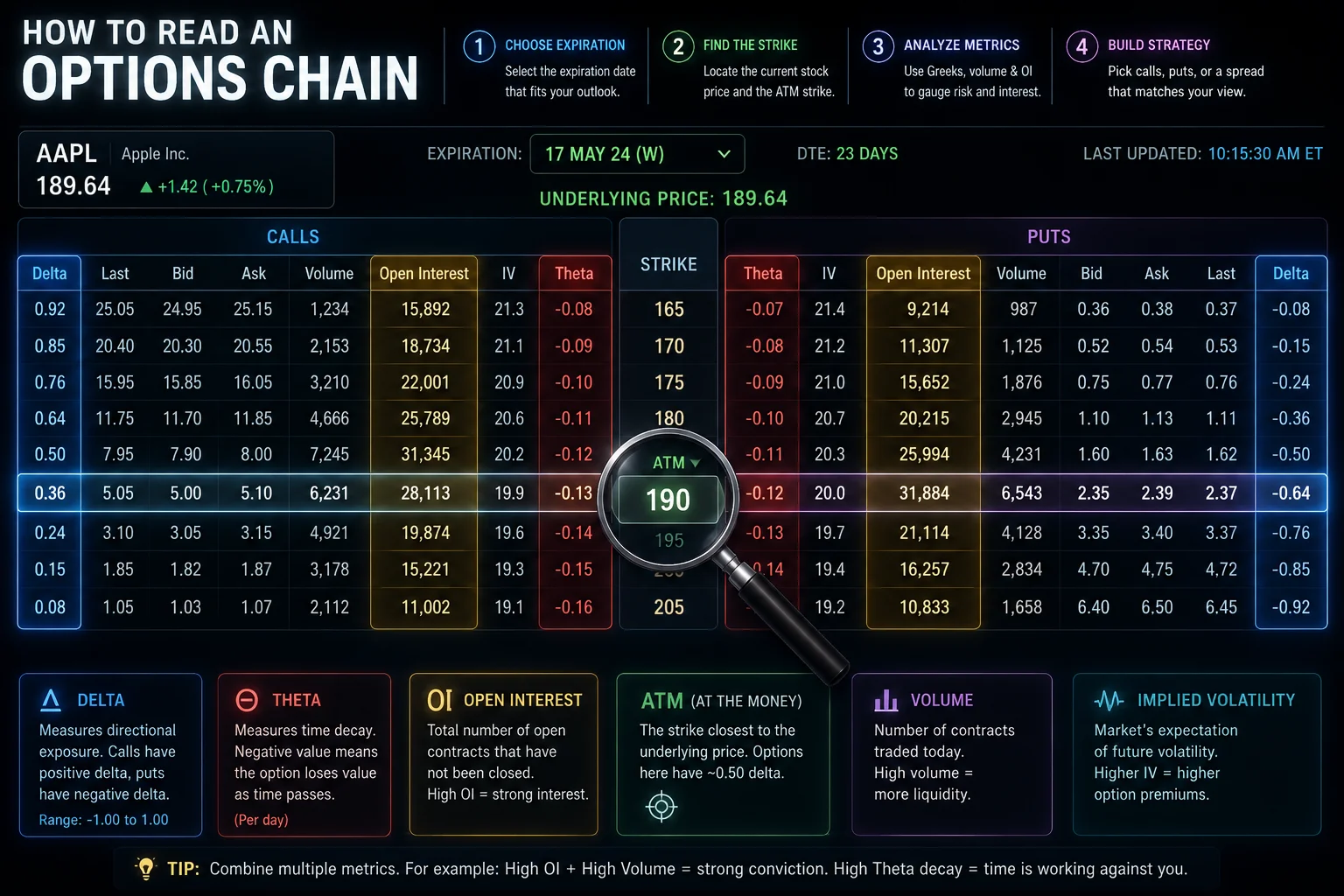
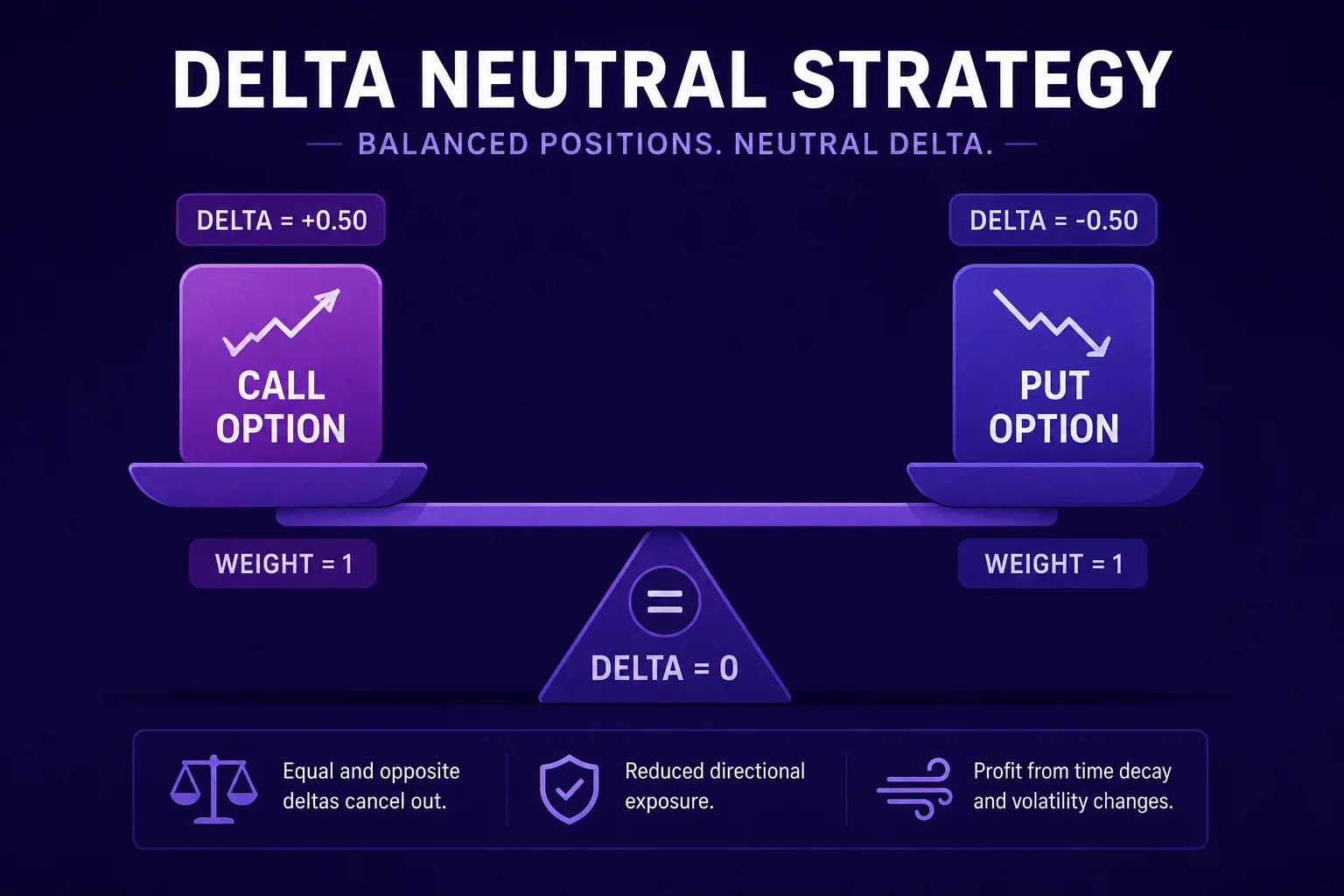
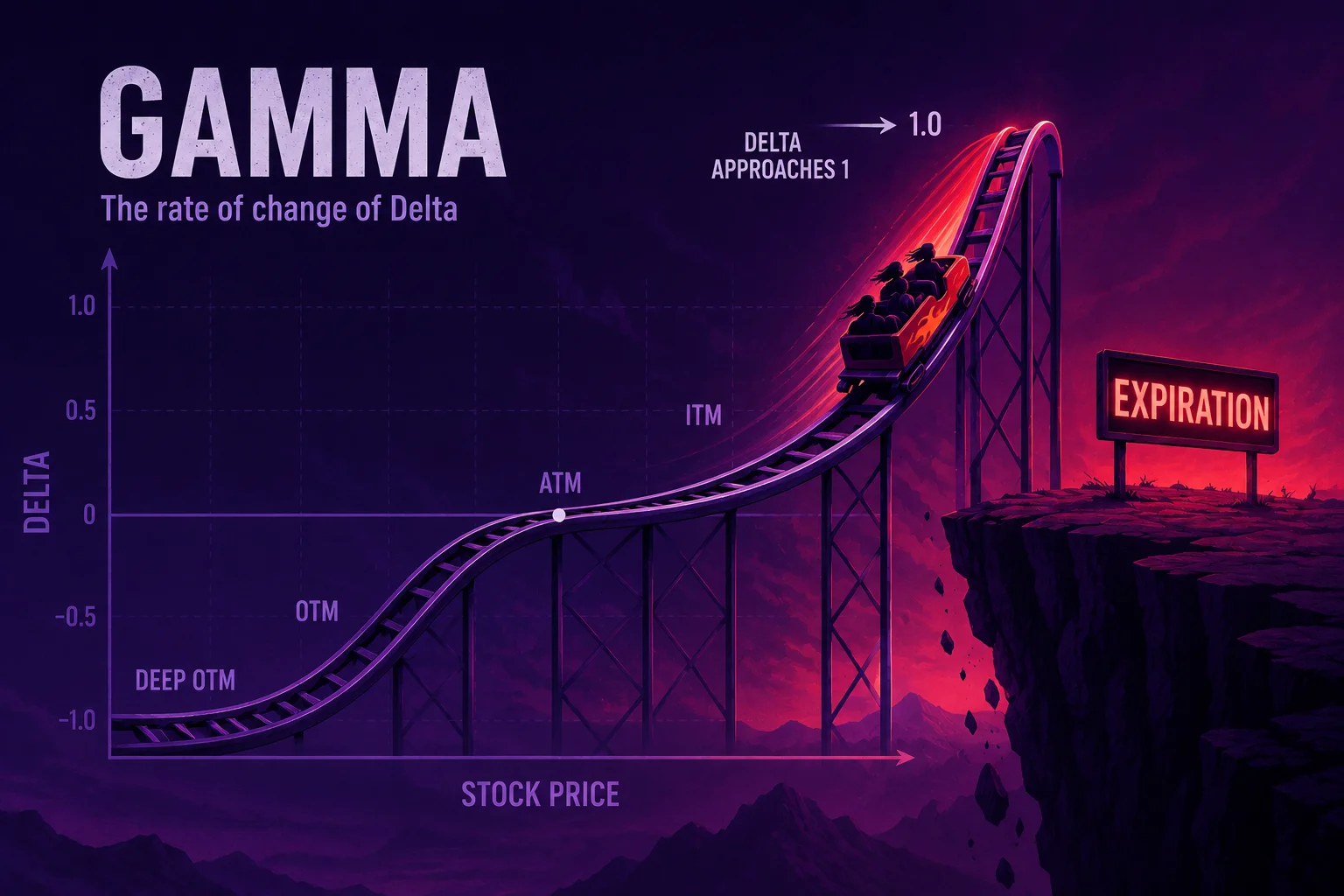
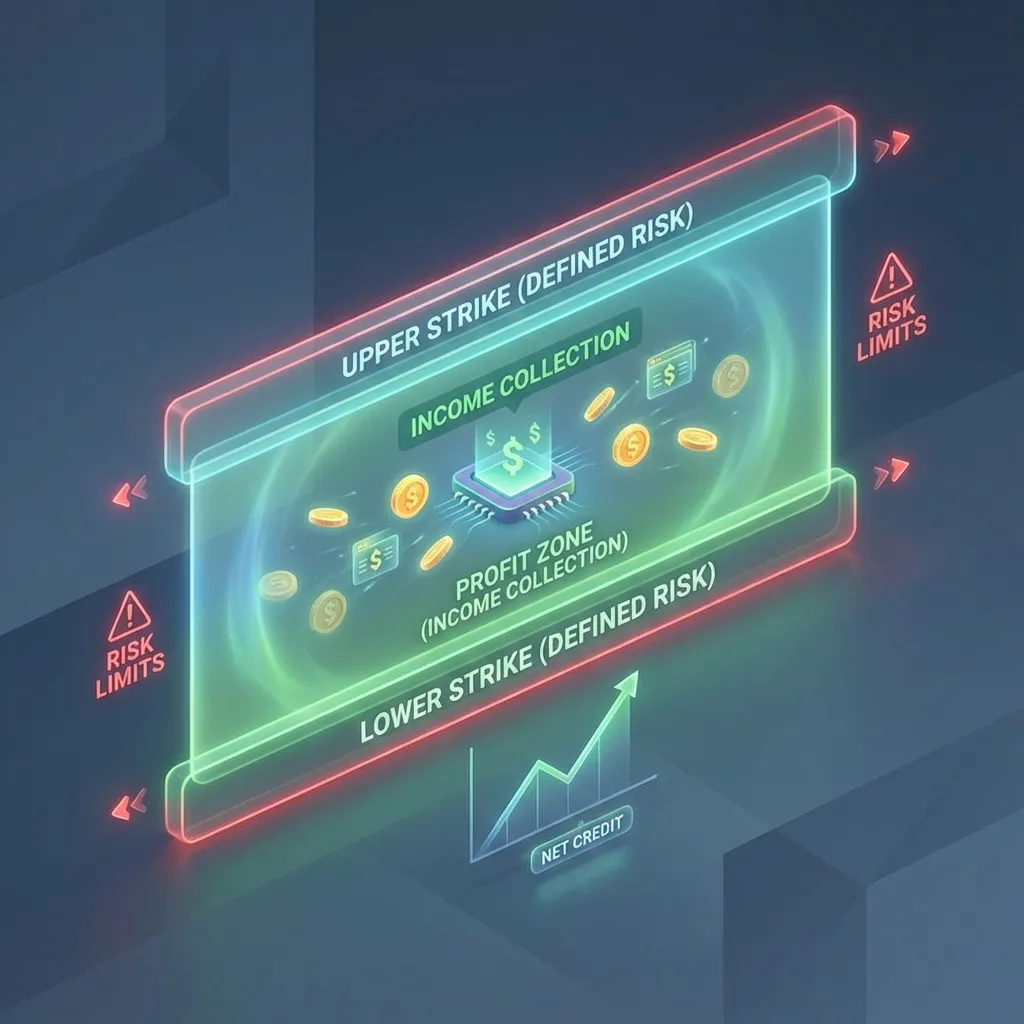
These guides start with the Greeks, because every strategy is ultimately a statement about them. A covered call is a bet on theta and a cap on delta. An iron condor is a bet that realised volatility stays below implied. Understanding the Greeks first turns the strategy list from memorisation into something you can reason about.
A word on statistics you will encounter elsewhere: the claim that "80% of options expire worthless" is a misreading of exchange data. Roughly 55-60% of contracts are closed before expiration, around 30-35% expire worthless, and about 10% are exercised. More importantly, the share expiring worthless says nothing about profitability — premium selling produces frequent small wins and occasional losses several times their size, so a high win rate and a positive expectancy are entirely different claims.